
How to Increase Direct Restaurant Orders
Most restaurant groups do not have a demand problem. They have a channel problem.
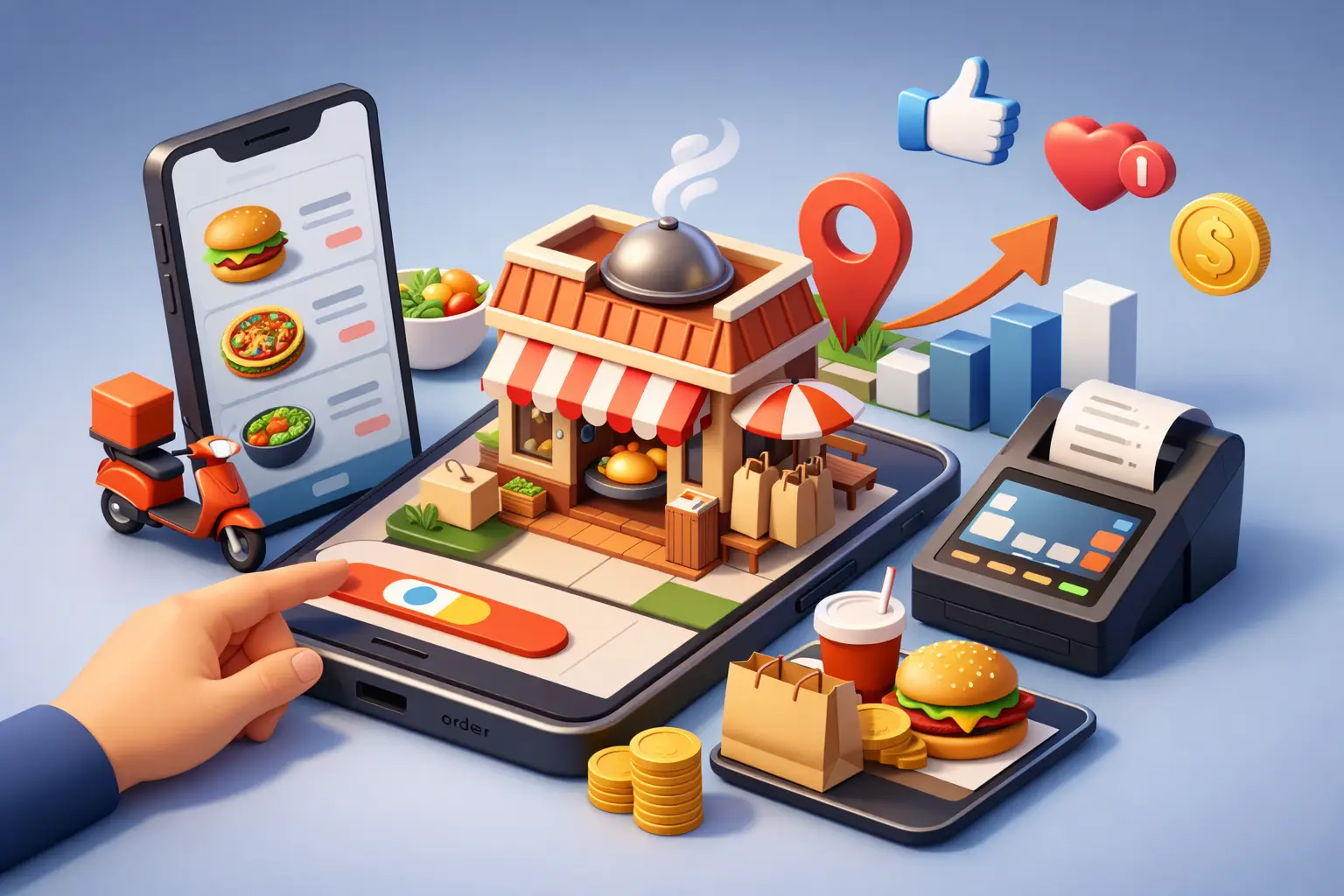
If you are asking how to increase direct restaurant orders, the first thing to get clear on is this: more customers are not always the answer. In many cases, the customers are already there. They are ordering through Uber Eats or Deliveroo, paying full price, and liking the food. The issue is that the relationship belongs to the platform, while the commission comes off your margin every single time.
That is why the real job is not replacing aggregators. It is converting aggregator demand into direct, repeat demand. Discovery on one side. ownership on the other. That is where the economics improve.
How to increase direct restaurant orders without cutting off discovery
A lot of operators make the same mistake. They treat direct ordering as a marketing problem and aggregators as the enemy. Neither is quite right.
Aggregators are useful. They put your brand in front of customers who were not looking for you specifically. For a multi-site brand in a competitive urban market, that matters. But once a customer has ordered from you once or twice, continuing to pay marketplace commission on every repeat order starts to look expensive very quickly.
So the question becomes more specific. How do you keep the discovery value while moving repeat behaviour onto your own channel?
You do it by making direct ordering feel normal, rewarding and easy. Not by hoping customers will suddenly change habits out of goodwill.
Start with the economics, not the technology
Before changing anything, work out what a direct order is worth to you.
If an aggregator order comes with 25 to 35 per cent commission, a £30 basket can lose £7.50 to £10.50 before you even think about food cost, labour and packaging. If that same customer orders direct next time, the margin difference is material. Across multiple sites, it adds up quickly.
This is where many brands undersell the opportunity. They focus on saving a bit of commission, when the bigger gain is repeat order economics. A customer you can reach directly is not just cheaper to serve. They are easier to bring back, easier to upsell and easier to understand.
That means your direct channel needs to be measured like a profit engine, not a side project. Track repeat rate, average order value, redemption of offers and customer frequency by site. If you cannot see those numbers, you will struggle to improve them.
Make the direct option genuinely better
Customers do not switch channels because you want them to. They switch because there is a clear reason.
Price can be part of it, but blunt discounting is usually the wrong starting point. If your direct strategy depends on permanently being cheaper, you may win the order and still lose the margin. A better approach is to make direct ordering better value rather than simply lower priced.
That could mean a points-based loyalty offer, a free item after a set number of orders, a direct-only bundle, or occasional bounce-back offers that reward repeat behaviour. The point is not to train customers to wait for discounts. It is to give them a sensible reason to come back to your own channel.
Convenience matters just as much. If your direct ordering journey is clunky, slow or inconsistent across sites, no loyalty offer will fix it. Customers will choose the easier option, even if it costs you more.
Use the packaging moment properly
For brands asking how to increase direct restaurant orders, the most underused asset is often the order already leaving the kitchen.
Every aggregator order is a chance to start the next direct one. Yet plenty of restaurants waste that moment with generic inserts, weak offers or nothing at all.
What works is simple. Put a clear message inside the bag. Give the customer one obvious next step. Make the benefit specific. Not vague brand language. Not five competing messages. One direct instruction and one commercially sensible reason to act.
For example, if a customer has just ordered through a marketplace, the insert should not try to educate them on your digital strategy. It should tell them what they get by ordering direct next time. A loyalty reward. A direct-only meal deal. A free side on their next order. Something easy to understand in three seconds.
This matters more than many operators think because the customer is already in a moment of proof. They have chosen your food. They are about to eat it. If the experience is good, the next order is the one you should be planning for.
Build repeat behaviour, not one-off direct spikes
A short-term campaign can push some direct traffic. That is not the same as building a repeatable direct order base.
The operators who do this well focus less on one big switch and more on gradual habit change. They give customers a reason to place the second direct order, then the third, then the fourth. Once that behaviour settles, the channel starts to hold on its own.
Loyalty is central here, but only if it is operationally simple. If staff need to explain complicated mechanics, or if the customer has to jump through hoops, take-up drops. The best loyalty systems are almost invisible. Order, earn, return. Simple enough to work across every site without becoming an operational burden.
That is also why branded direct ordering tends to outperform generic white-label setups when the goal is retention. The customer should feel they are ordering from your brand, not from a checkout tool. That brand continuity helps build memory and preference over time.
Treat customer data as an operating asset
This is where direct ordering changes the game.
On an aggregator, you get volume but very limited customer ownership. On your own channel, you can see who ordered, what they bought, how often they return and which sites perform best with which offers. That is commercially useful information.
Used properly, it lets you segment offers by behaviour rather than spraying discounts at everyone. High-frequency customers might need recognition, not money off. Lapsed customers might need a stronger reason to return. New direct customers may respond best to a reward that lands on the second order rather than the first.
For a multi-site operator, this matters even more. Different locations have different demand patterns, basket mixes and customer rhythms. A one-size-fits-all approach usually misses margin somewhere.
How to increase direct restaurant orders across multiple sites
The multi-site challenge is not just getting direct orders. It is getting them consistently.
What works in one location may not work in another. High street lunch trade behaves differently from suburban evening delivery. Student-heavy areas respond differently from family-led catchments. That means your direct ordering strategy needs a central framework with local flexibility.
Keep the core offer, brand experience and loyalty structure consistent across the group. That gives you control and makes the proposition recognisable. But allow site-level adjustments where demand patterns justify it. Menu bundles, local campaigns and timing windows do not always need to be identical.
The operational test is straightforward: can your teams run it without friction? If the answer is no, simplify it. Direct growth that depends on head office enthusiasm but creates site-level confusion will not last.
Do not try to win everything at once
Some operators get excited about direct ordering and immediately try to drag all demand away from marketplaces. That usually backfires.
The better approach is to be selective. Keep using aggregators for what they are good at - discovery, convenience and incremental reach. Then focus your direct efforts on the customers most likely to convert into repeat owned demand.
That usually means customers who already know your brand, who have ordered more than once, or who respond well to value-based loyalty rather than one-off discounting. Those are the customers where the margin win compounds.
This is also why a flat-fee direct model tends to make sense commercially. If your direct system charges in a way that rises with order volume, some of the benefit gets diluted as you grow. Predictable cost matters when you are trying to improve per-order economics across several locations.
For that reason, brands using a system like Carpia often find the shift becomes easier to justify internally. The numbers are clearer. The operating model stays familiar. And the objective is realistic - not replacing aggregators, but owning more of the repeat business they helped you acquire.
The message has to be clear internally as well
One final point. If your team sees direct ordering as a marketing initiative, it will get treated like a nice extra. It is not. It is a margin and customer ownership initiative.
That means ops, marketing and site leadership all need to understand the same thing: every repeat order moved from commission-heavy channels to your own channel improves unit economics. The shift may happen customer by customer, but the financial effect shows up at group level.
If you want direct orders to grow, make it part of how you talk about performance. Not just sales. Sales quality. Not just order volume. Channel mix. Not just acquisition. Repeat behaviour.
That is usually where progress starts to become visible.
The restaurants that win here are not the ones trying to fight the platforms. They are the ones using them for reach, then doing the smarter job afterwards.
Insights
Insights that shape restaurants growth
Learn how restaurants use Carpia to drive direct orders and improve margins.