
Choosing a Multi Site Restaurant Ordering Platform
Most multi-site operators do not have an order problem. They have a margin problem dressed up as a channel strategy.
Most multi-site operators do not have an order problem. They have a margin problem dressed up as a channel strategy. Sales are coming in. The kitchens are moving. The aggregator tablets keep buzzing. But every order routed through a third-party app carries the same question: how long are you willing to rent your own customer?
That is why the right multi site restaurant ordering platform matters. Not because it gives you another bit of software to manage, and not because it replaces Uber Eats or Deliveroo overnight. It matters because if you run more than one location, the economics compound quickly. So do the missed opportunities when customer data, repeat order behaviour and brand loyalty all sit somewhere else.
What a multi site restaurant ordering platform should actually do
A lot of platforms get sold on features. More widgets. More integrations. More dashboards. That is usually the wrong starting point for a restaurant group.
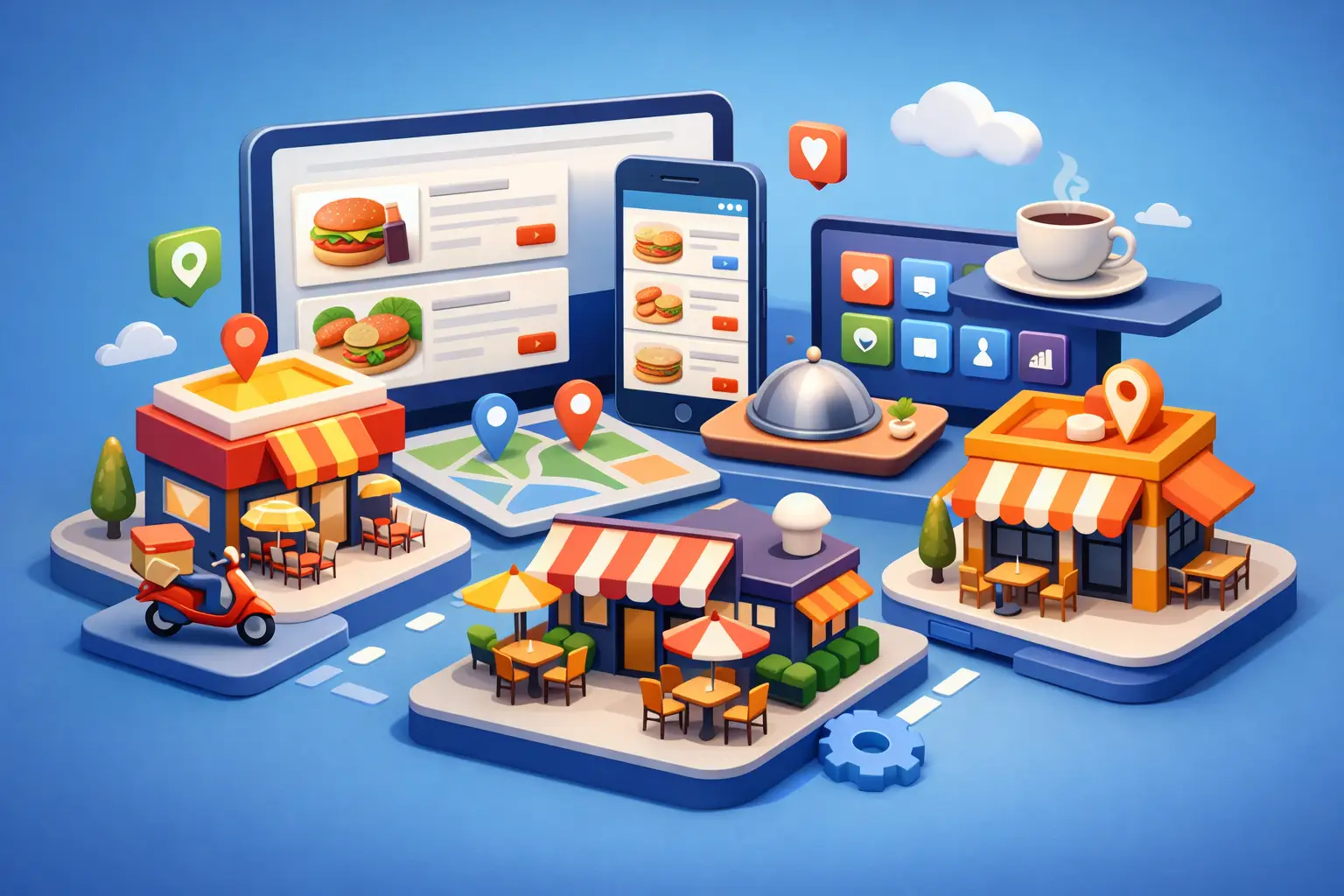
If you operate two sites, six sites or fifteen, the real job of a multi site restaurant ordering platform is simple. It should help you turn distributed demand into owned repeat revenue. That means giving each location the ability to trade locally, while allowing the group to control brand standards, reporting, promotions and customer retention from one place.
The distinction matters. Single-site ordering tools often look fine in a demo, then become awkward once you need location-specific menus, postcode rules, opening hours, reporting by branch and centrally managed campaigns. At that point, what looked cheap becomes expensive in time, inconsistency and missed repeat orders.
For a multi-site brand, the platform has to work at two levels at once. Local execution. Central control. If it cannot do both, it is not solving the real operational problem.
The real commercial case: margin, ownership and repeat orders
Most operators already understand the role aggregators play. They are good at discovery. They put your brand in front of people who may never have searched for you directly. That has value.
The issue is what happens next. If a customer orders from you three times through an aggregator, you are still effectively paying for access every single time. You do not properly own the relationship. You do not control the post-purchase journey. You do not have much room to build loyalty beyond discounting.
Across multiple sites, that dependency gets expensive fast. A single branch might absorb that leakage for a while. A group cannot ignore it. If each location is doing meaningful delivery volume, commission becomes a recurring tax on demand you helped fulfil and your team helped create.
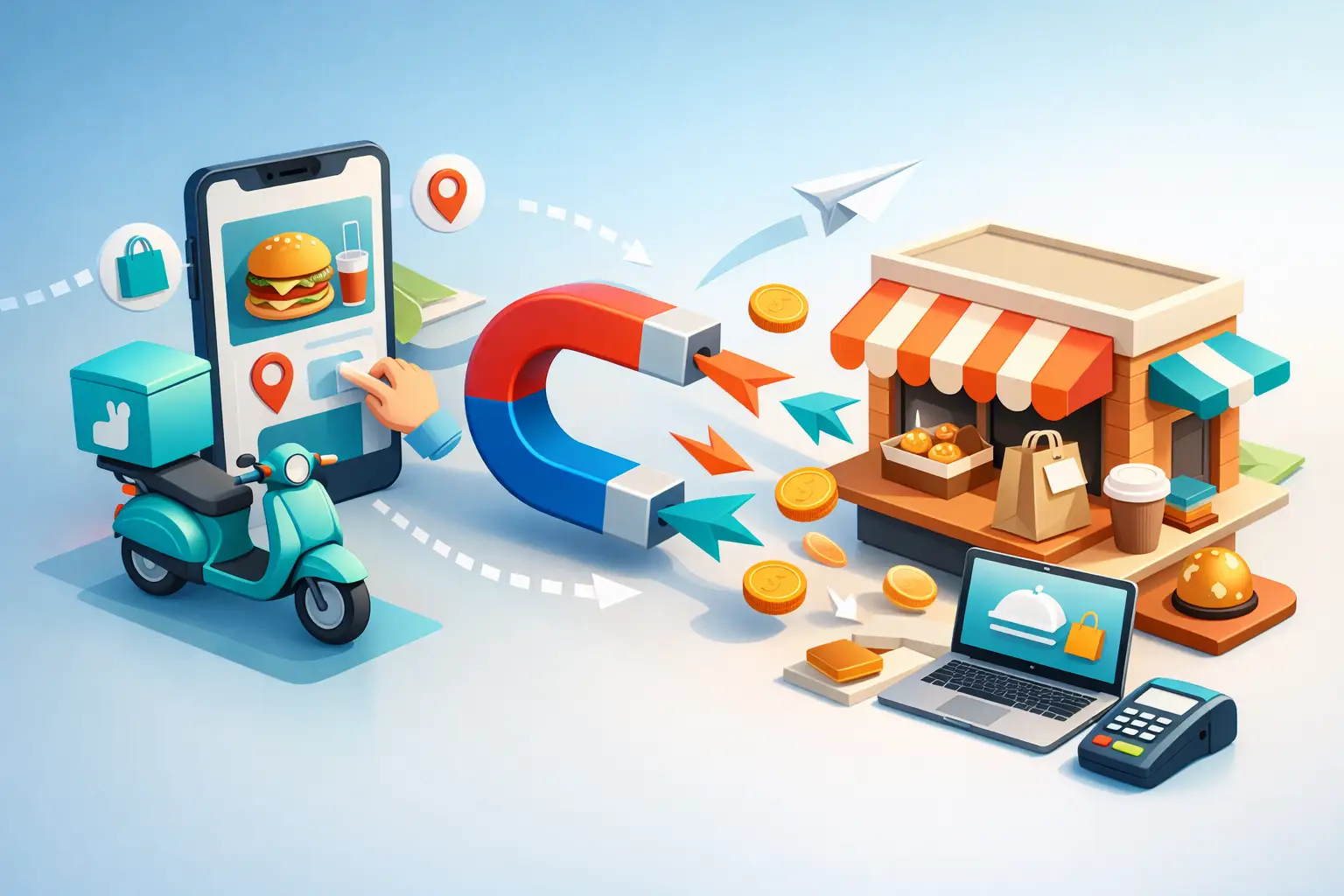
That is where a direct ordering platform earns its keep. Not by pretending aggregators should disappear, but by giving you a way to capture repeat behaviour after discovery has happened. One customer acquired on a marketplace can become a direct customer on the second or third order. That is where the economics shift.
Say a site is processing 1,000 delivery orders a month. If even a modest share of those customers moves into a direct channel over time, the savings are not theoretical. They show up in margin. They show up in customer data. They show up in the ability to market without paying commission on every return visit.
Why single-site thinking breaks at group level
Many restaurant groups make the same mistake. They pilot a direct ordering tool at one site, prove there is some demand, then assume the same set-up can be copied across the estate.
Usually it can, but not cleanly. Menus vary. Trading patterns vary. Delivery zones vary. Some sites need collection prominence. Others are built around delivery. One branch may need to suppress a product on Friday evenings because production is tight. Another may want a local campaign tied to student demand or office trade.
Without a proper group-level platform, these decisions become manual workarounds. Head office starts chasing consistency. Site managers make local edits. Reporting loses clarity. Marketing becomes fragmented. The customer experience drifts.
The cost here is not just admin. It is weakened brand control and slower decision-making. Multi-site operators need one ordering ecosystem that can reflect local realities without creating chaos.
What to look for in a multi site restaurant ordering platform
Start with the economics, not the interface. If the platform does not have a clear route to improving contribution margin, it is not the right investment. Pretty front ends do not fix channel leakage.
After that, look at practical control. You need central management of branding, offers and loyalty mechanics, but enough local flexibility for site-specific menus, fulfilment rules and opening times. The balance matters. Too much centralisation and local trading suffers. Too much local freedom and the brand becomes inconsistent.
Customer ownership is the next test. Can you actually capture usable customer data? Can you segment customers by location, order frequency or spend? Can you give them a reason to come back directly without resorting to blanket discounts? If the answer is no, the platform is not helping you build an asset. It is just processing transactions.
Then there is operational fit. The best platform in theory will fail if it creates friction in service. It should sit alongside your existing delivery flow, not force a full operational reset. Busy restaurant teams do not need another complicated system. They need a channel that works predictably on a Friday night.
Finally, be realistic about rollout. If getting live across several sites takes months of project management, most groups will lose momentum. Speed matters because every delayed month is another month of commission dependency.
Loyalty is not a nice extra
For multi-site brands, loyalty often gets treated as a marketing add-on. It is not. It is the mechanism that changes customer behaviour.
If your direct channel gives customers the same experience as an aggregator, with none of the habit or incentive to switch, many will not switch. Convenience usually wins. That is why built-in loyalty matters. It gives customers a practical reason to order direct next time, and the time after that.
The key is to keep it commercially sensible. This is not about handing out margin in the form of endless voucher codes. It is about rewarding repeat behaviour in a way that builds frequency and raises customer lifetime value. Better still if it works across multiple locations, so a customer stays loyal to the brand rather than a single branch.
That is one of the biggest advantages for a group operator. A strong direct channel can create network effects inside your own estate. Customers move around. They work in one area, live in another, socialise somewhere else. A branded direct ordering journey with loyalty attached lets the customer stay with you across locations.
The trade-off most operators need to accept
A direct channel will not replace aggregator volume overnight. For some brands, it never should. That is the wrong expectation and usually leads to bad decisions.
Aggregators are still useful for top-of-funnel demand. They are where plenty of customers discover you first. The more commercially sound approach is to treat them as an acquisition channel, then build your own route for retention.
That means your platform choice should support coexistence. It should help you convert aggregator-acquired customers into direct, repeat customers over time. Not through wishful thinking, but through branding, data capture, loyalty and a cleaner post-first-order journey.
This is where many operators become either too passive or too ideological. Too passive means accepting permanent commission dependence. Too ideological means trying to force all demand direct and sacrificing visibility. The right answer sits in the middle. Use aggregators for reach. Use your own platform for relationship and margin.
Why the maths gets stronger with every site
The more locations you run, the less this is a marketing preference and the more it becomes a structural commercial issue. One site paying away a chunk of every repeat order is painful. Ten sites doing it is a pattern.
That is why flat, predictable pricing matters as well. A platform that charges in a way that keeps your economics clear is easier to justify across an estate. If the cost to run direct ordering is fixed and the upside sits in recovered margin and repeat trade, the decision becomes straightforward.
Carpia’s model is built around that reality: helping restaurant groups use aggregators for discovery while converting those customers into direct repeat business for £79 per month per location. That is a practical answer to a practical problem.
If you are running a multi-site brand, the question is not whether direct ordering has a place in your mix. It is whether your current set-up gives you any serious way to own the customer after the first marketplace order. If it does not, you are not just paying commission. You are paying to stay anonymous to your own demand.
The operators who will come out strongest over the next few years are not the ones who abandon aggregators. They are the ones who stop letting aggregators own the entire customer lifecycle.
Insights
Insights that shape restaurants growth
Learn how restaurants use Carpia to drive direct orders and improve margins.